In this guide
Describe three real projects
Write down the metal, joint access, working location and finish required for the projects you expect to practise. Choose the process for those jobs, then shortlist equipment. A low sticker price is useful only when the equipment suits the work.
Build the whole setup budget
Include suitable protection, fume control, training, preparation tools, consumables, and any gas cylinder, regulator or torch accessories. Check the supply and the manufacturer’s environmental requirements. A domestic plug does not establish that a machine is suitable for a residential installation.
Compare at useful output
A maximum current rating alone hides how long a machine can weld before cooling. Read the duty cycle at the current you expect to use. Confirm which process that figure describes.
Start with a shortlist
Explore the amateur and hobby catalogue. The specifications and price snapshots are source-linked. Fit notes are editorial assessments; they are not hands-on test scores. Practise on scrap of the same material and thickness, with qualified instruction when needed.
Decide what you want the first lesson to teach
Choose one supported process and a simple supervised exercise before comparing a long list of machines. If your first goal is a small steel fabrication project, describe its material and joints clearly. If the goal is precise visible work, explain that separately. Learning to control one process is easier to plan when the intended result is specific.
Keep practice apart from repairs that support people, vehicles, lifting equipment or pressure systems. Such work needs the relevant competence, procedure and acceptance arrangements. A first machine purchase should not quietly become permission to attempt every repair around the house. Identify appropriate beginner projects with an instructor so that the equipment choice supports a realistic learning path.
Compare supported configurations
Ask the seller to connect the exact model to your material, consumable and chosen process. Identify which accessories come with the regional package and which must be added. A model name, maximum current or attractive photograph leaves many practical details unresolved. Keep the manual and written package list beside the quotation.
For a wire-fed option, confirm the intended wire arrangement and gas requirements. For TIG capability, identify the supported output mode and required torch or remote control. For stick, confirm the electrode compatibility and documented setup. Do not assume that every advertised multiprocess machine provides identical capabilities. A simpler machine can be the better purchase if it clearly supports the work you will actually practise.
Make the workshop part of the budget
List suitable work support, preparation tools, protection and exposure controls. Include a compatible gas arrangement where the process needs it. Check storage, cylinder handling and cable routing as well as the machine's dimensions. An empty corner in a garage is not yet a planned welding space.
Use the manual to establish input requirements, and have installation questions assessed by a qualified person. If the supply or location is unsuitable, resolve that before buying. A bargain power source may create a much larger total cost when the missing workshop arrangements are added. The ownership cost calculator helps make those assumptions visible beside the purchase price.
Try the controls and movement
Ask for an authorised demonstration with appropriate protection and supervision. Use identified material and a representative joint. Watch the entire process, including fitting, setup, starting, finishing and inspection. Record the accessories and consumables used so that the demonstrated configuration can be compared with the quote.
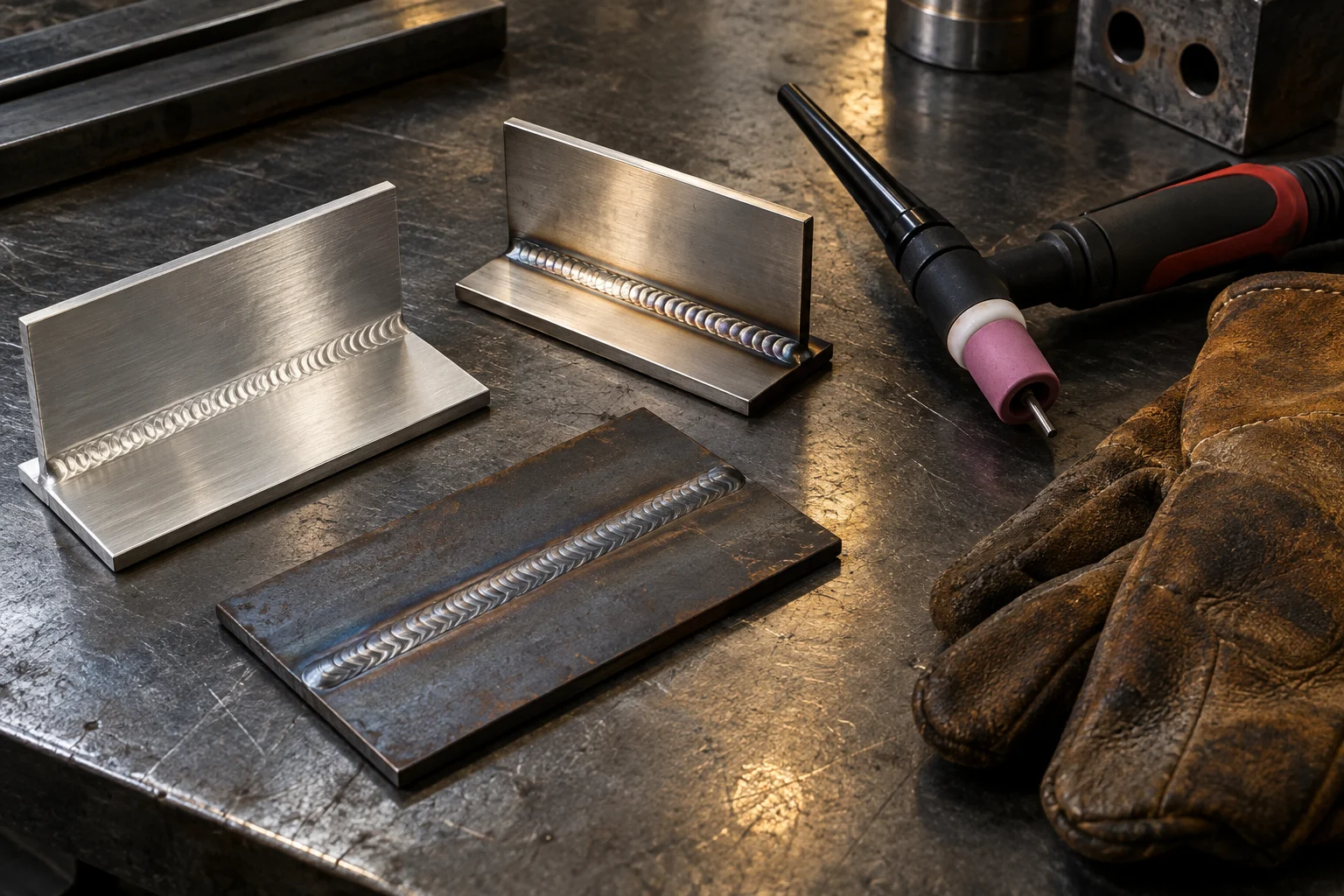
With the equipment isolated, check how the controls and torch feel in your working position. If supervised practice is available, try a simple exercise within the trainer's setup. An expert's smooth bead shows what the equipment can do in experienced hands. Your own experience helps identify the support and coordination practice you will need. Include both observations in the decision.
Buy support you can actually use
Ask where wear parts, replacements and service will come from. Check whether the manual is understandable and whether a local supplier can answer configuration questions. Compare warranty and return terms for the exact package. A familiar brand name is useful context, but it does not resolve support for every imported or older model.
Keep the seller's answers with the machine record. Note which parts you should inspect routinely and which tasks belong to authorised service. A small supply of correct consumables can be more useful than a large mixed accessory bundle. Buy the parts needed for the supported first configuration, then add capabilities when a real project justifies them.
Begin a practice notebook
Record the material, joint, consumable, machine setup and observations for each supervised exercise. Photograph the cooled sample with its label visible. Choose one skill to improve at a time, such as a steadier travel movement or more consistent fit-up. Keep your instructor's comments alongside the sample record.
Use the learning paths for a clear sequence and the official manuals for exact equipment instructions. Review the first purchase after you have enough practice to understand its limits. That experience can make a later upgrade more precise. A useful hobby setup lets you learn, repeat suitable work and obtain help when a question appears, without spending the whole budget on features you have not yet found a reason to use.
Put the choice in context.
Try the welding process finder to narrow your equipment research, or compare a complete setup in the ownership cost calculator.
References
Open the publisher’s page. If a new tab fails, use “Open directly” or copy the address into your browser.
- STAHLWERK: exact model, duty cycle and installation restrictionsOpens the source in a new tabstahlwerk-schweissgeraete.deLink checked · 31 Oct
- ESAB: Rogue MMA capabilities and input supplyOpens the source in a new tabesab.comLink checked · 31 Oct