In this guide
What shielding gas does
Shielding gas protects the molten weld region from the atmosphere. Gas selection also affects arc behaviour and transfer, so it belongs in the procedure rather than being treated as an interchangeable accessory.
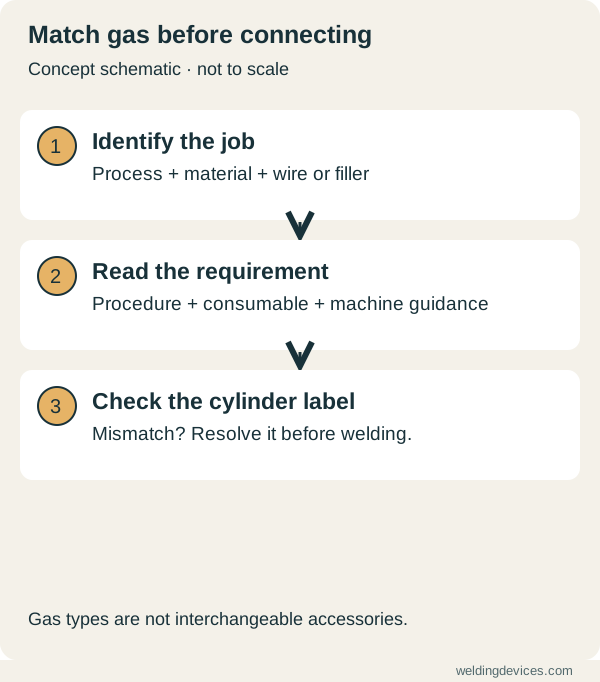
Schematic; source.
Different processes need different gases
For common steel MIG/MAG applications, specified mixtures often contain argon with an active gas such as carbon dioxide. Aluminium MIG commonly uses argon. TIG commonly uses inert shielding such as argon; a steel MAG mixture is not a general substitute for TIG gas.
The correct composition depends on the process, material, wire and approved programme. Use the gas specified by the consumable, equipment instructions and welding procedure.
Look beyond the label
Gas delivery matters too. Inspect the regulator, hose and connections, use a compatible flowmeter, and protect the shielding from draughts. Follow the specified flow rather than copying a number from an unrelated torch or joint.
Workshop example
Before borrowing a cylinder for a new task, compare its label with the job requirements. If the label does not match, resolve the mismatch before striking an arc. This small check is more useful than trying to compensate for the wrong gas with machine adjustments.
Handling belongs in the plan
Secure cylinders and follow supplier instructions for storage, connection and transport. In confined or poorly ventilated areas, shielding gas can displace breathable air. Such work requires a specific assessment and trained controls.
Write the process name in full
When asking a gas supplier for advice, include the process, base material, wire or filler designation and intended welding mode. A request for welding gas leaves too much unresolved. A gas used for one MIG/MAG application should not be assumed suitable for TIG, aluminium or a different wire. Keep the consumable data sheet and machine instructions with the request.
For a multiprocess machine, make a separate equipment note for each supported setup. That helps you avoid leaving an unsuitable cylinder connected after changing the torch or consumable. Label the cylinder and record the gas description from its supplied documentation. Do not identify gas from cylinder colour alone, because conventions and local arrangements can differ.
Read the whole supplier quotation
Ask what the cylinder arrangement includes: purchase, rental, deposit, refilling or exchange. Confirm the required regulator and compatible fittings with the supplier. A low refill price may be less useful if the cylinder cannot be exchanged conveniently near your workshop. Include collection or delivery and the supplier's storage and transport instructions in the comparison.
For occasional work, estimate how often you expect to use the equipment and ask about available cylinder sizes. For regular work, ask how supply interruptions and replacements are managed. Use real quotations in the ownership cost calculator. The useful question is the cost and practicality of a supported gas arrangement, rather than which bottle appears cheapest on one listing.
Distinguish pressure from flow
Cylinder pressure indicates a condition within the supply system; it is not a measurement of shielding at the joint. Use the equipment and method specified to set and verify gas flow. Confirm that the regulator or flowmeter is intended for the gas and connection arrangement. Follow the instructions for safe connection and checking rather than adapting a mismatched fitting.
Increasing flow is not a universal answer to porosity. Review the correct setup, torch condition, leaks and working environment with competent help. Record the original setting and what was checked before changing anything. If a practice result improves, repeat the comparison under the same conditions. That creates evidence you can discuss, rather than a new number with no explanation.
Arrange shielding and extraction together
The weld needs suitable shielding, while the operator needs effective exposure controls. Plan both. A fan that disturbs shielding is not a substitute for a properly assessed extraction arrangement. Turning off necessary extraction to improve the bead creates a different problem. Ask for help placing suitable capture equipment and arranging the working area so that both requirements can be met.
Outside, consider wind and the location of nearby people. An outdoor setting does not automatically establish adequate exposure control or reliable shielding. If the environment cannot support the chosen process, reconsider shelter, equipment and the work plan. The safety section explains the wider issues, and the exact procedure determines what is appropriate for the actual job.
Keep gas checks in your practice record
Record the gas designation, consumable, process, documented setup and any shielding observations with each coupon. Note a cylinder change or a new connection separately. If a fault follows one event, that gives a trainer or supplier a useful starting question. It does not prove the cylinder was responsible, but it narrows the investigation.
Store the supporting documents with the equipment record and revisit them when changing material or welding mode. A gas choice is successful when it is compatible, safely supplied and suitable for the process under the intended conditions. A good-looking bead on one sample cannot replace those checks, particularly when a job has a defined inspection requirement.
Put the choice in context.
Try the welding process finder to narrow your equipment research, or compare a complete setup in the ownership cost calculator.
References
Open the publisher’s page. If a new tab fails, use “Open directly” or copy the address into your browser.
- Miller — Shielding gas for MIG weldingOpens the source in a new tabmillerwelds.comLink checked · 31 Oct
- OSHA — General welding requirementsOpens the source in a new tabosha.govAutomated check blocked · 31 Oct
- Primary source supporting the instructional schematic · sourceOpens the source in a new tabmillerwelds.comLink checked · 31 Oct
