In this guide
Describe the cut first
Record the material, thickness, shape, accuracy and number of cuts. A one-off trim and a batch of identical tube lengths need different equipment. Include finishing and setup time in the decision.
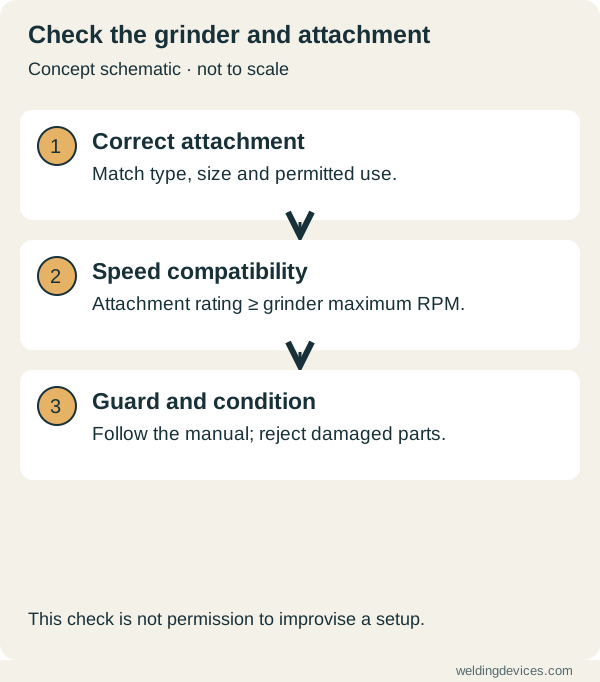
Schematic; source.
Grinders and saws
An angle grinder can support cutting and preparation with the correct attachment. Match the disc type, size and rated speed to the tool, keep the specified guard fitted and follow the manual. A metal-cutting saw may be worth evaluating for repeated straight cuts; check its material capability, work holding and blade requirements.
Plasma cutting
Plasma cutters need a suitable electrical supply and the gas or compressed-air arrangement specified by the manufacturer. Compare recommended cutting capacity with your regular work, rather than choosing by maximum severance thickness alone. Include air preparation, compressor requirements and replacement torch consumables.
Compare the whole station
Request a demonstration on representative material. Judge edge quality, dimensional consistency, cleanup, consumable cost and the controls needed for dust, fume, noise and sparks.
A modest-budget option
For occasional projects, buying accurately cut stock or paying for a cutting service can be worth comparing with owning another machine. Keep the welder budget and the preparation budget visible as separate items.
Write a cutting brief
Describe the material, section shape, thickness, number of pieces and finish required. Include the permitted dimensional variation and whether the edge needs further preparation before welding. A rough separation cut and a repeat length cut are different jobs. Begin the equipment comparison from those requirements rather than from the largest advertised cutting capacity.
Imagine making several identical frame members. Ask how each tool supports measurement, work holding and repeated cuts. Then imagine trimming an awkward existing assembly. Access and portability become more important. This comparison helps explain why one workshop may need more than one cutting method, while a beginner can often start with a smaller supported arrangement chosen for the first projects.
Check the grinder and wheel together
For an abrasive tool, confirm the permitted wheel type, size and rating using the tool and wheel instructions. Check the guard and required protective equipment. A wheel fitting the spindle does not establish that it is suitable. Never remove a guard or use a cutting wheel for an activity outside its intended use to make an awkward cut seem easier.
Inspect and mount accessories as instructed, with the equipment safely isolated. Plan work holding and keep the operator out of unsafe positions. Follow the appropriate training and local requirements for the operation. If the setup forces you to improvise around a poorly supported piece, reconsider the cutting arrangement before starting. A short cut still deserves a suitable method.
Compare saw capability with the actual section
Read the saw's documented capacities and blade requirements for the material and cut angle. Confirm how the workpiece will be clamped and supported. A quoted capacity at one angle may not describe another. Include the manufacturer's operating and maintenance instructions in the purchase decision, especially for a used or unfamiliar saw.
Ask a supplier to demonstrate a representative cut. Measure the result using a consistent method and note setup time, cleanup and any further edge preparation. For repeat work, check how stops or fixtures can be used appropriately. A fast cut is less useful if the required dimensions cannot be maintained or the holding arrangement makes the next piece awkward to position.
Treat plasma as a complete system
Check the input supply, required air or gas arrangement, supported material range and consumables against the exact plasma model. Distinguish the capacity figures and quality descriptions used by the manufacturer. A maximum separation claim does not necessarily represent the edge quality or speed you need for normal fabrication.
Ask what is included in the package and what the workshop must provide. Consider extraction, noise, protective equipment and the handling of hot cut material. Review access for the torch and the ability to follow a guide where the intended method supports it. Budget for routine consumables and service. The useful comparison is a functioning cutting system, not a power source considered by itself.
Inspect the edge before welding
After cutting, check the dimensions, edge condition and required preparation against the drawing or training exercise. Do not assume that a separated piece is ready to weld. Identify burrs, debris or preparation needs and deal with them using the appropriate tools and method. Safe handling and eye protection remain relevant during cleanup.
Record how much correction the chosen cutting method required. That time belongs in a professional comparison and in a realistic hobby plan. Use the workshop essentials guide to improve holding and measurement, then the joint preparation lesson before welding. A good cutting setup leaves you with accurate, safely handled parts that support the next stage.
Keep a labelled cut sample when comparing tools. Record its material, method, dimensions and preparation needed afterwards. That small reference makes the next buying discussion concrete and helps you recognise whether the chosen method consistently supports the welding stage.
Put the choice in context.
Try the welding process finder to narrow your equipment research, or compare a complete setup in the ownership cost calculator.
References
Open the publisher’s page. If a new tab fails, use “Open directly” or copy the address into your browser.
- CCOHS — Safe use of portable grinders · sourceOpens the source in a new tabccohs.caLink checked · 31 Oct
- Hypertherm — Choosing a plasma cutterOpens the source in a new tabhypertherm.comLink checked · 31 Oct
