In this guide
Start at the source
HSE places exposure reduction and source extraction ahead of respiratory protection. For indoor welding, assess effective local exhaust ventilation that captures fume near its source. Opening a door or pointing a household fan across the bench does not establish adequate control.
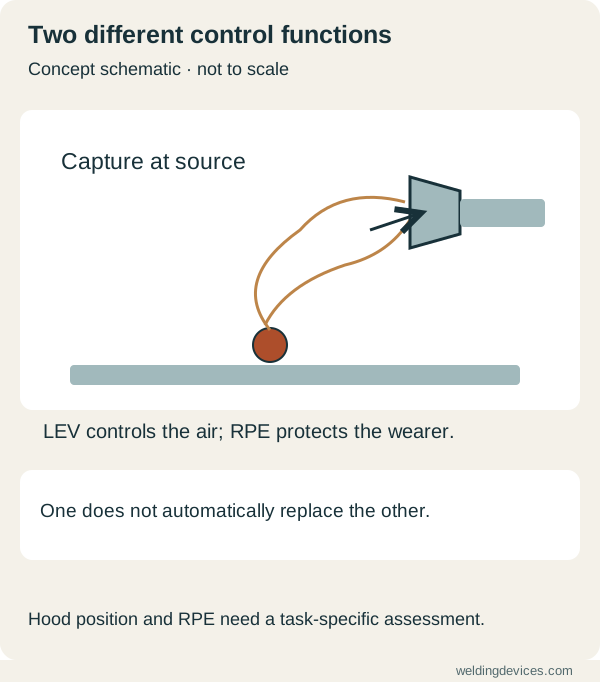
Schematic; source.
What a respirator adds
Respiratory protective equipment addresses remaining exposure when extraction is insufficient or impracticable. Selection depends on the hazards, duration and other protection in use. A standard welding helmet protects the eyes and face; it does not filter the air you breathe.
Fit and compatibility matter
Tight-fitting respiratory protection needs appropriate fit testing and a reliable face seal. Facial hair can prevent that seal. Powered systems have their own protection ratings, maintenance needs and limitations. Filters must match the assessed contaminants; a particulate filter does not protect against every gas or oxygen deficiency.
Compare a complete system
Ask a competent supplier about capture performance, filter replacements, servicing and compatibility with your helmet. Include those costs in the workshop budget. Treat confined spaces as specialist work requiring additional controls.
The linked HSE guidance describes UK workplace practice. Use the requirements and competent assessment that apply to your own location and task.
Describe the exposure before buying equipment
Identify the material, coatings, process, work duration and location. Include preparation and other nearby activities where relevant. Ask a competent adviser to establish the exposure-control requirements that apply to the work. The appearance or smell of the air cannot substitute for that assessment, and a familiar material does not make the fume concern disappear.
Bring a sketch of the bench, normal part sizes and operator positions to the discussion. Explain whether the work changes location or occurs outdoors. A capture arrangement useful for a small repeated joint may need adjustment for a much larger assembly. Buying an extraction unit by motor power or a respirator by price leaves the actual exposure question unresolved.
Ask how source capture will be verified
For a proposed extraction system, ask where capture should occur, how the equipment is positioned and how its performance is checked. Follow the supplier's and competent assessor's instructions. Identify what the operator must check before work and what requires specialist examination or maintenance. Keep those responsibilities in the workshop routine.
During an authorised demonstration, show the normal working positions and torch access. Ask whether the system remains effective through the relevant movement. Avoid placing capture equipment only where it looks neat in a photograph. A useful arrangement needs to function during the job and leave the operator able to perform it correctly. Keep shielding requirements and exposure controls in the same planning discussion.
Choose respiratory protection for the remaining risk
Where respiratory protection is required, selection must match the assessed hazards and use conditions. Ask about the appropriate protection level, filters, wear duration and compatibility with other equipment. Tight-fitting protection needs the required fit testing and a reliable seal. Facial hair and other fit issues must be addressed through a suitable arrangement rather than ignored.
Powered and loose-fitting systems have their own documented limitations and maintenance needs. Compare the complete system, including compatible headgear, batteries where relevant and replacement parts. A powered unit is not a universal answer to every atmosphere. Particulate filters do not establish protection from all gases or an oxygen-deficient environment. Specialist conditions require specialist controls and trained personnel.
Include routine care in the decision
Ask who changes filters, performs checks and arranges servicing. Confirm how replacement parts are obtained and how the equipment indicates a problem. Follow the specified replacement and inspection methods rather than waiting for an obvious smell or visible fume as the only trigger. Record maintenance using the supplier's recommended system.
Budget for those recurring needs. A cheap initial unit with unavailable filters can be less practical than a well-supported arrangement. Keep charging and storage instructions with powered equipment and confirm that the system is ready before the lesson starts. If a required component is missing or a check fails, pause the work rather than treating the equipment as optional for a short weld.
Keep the operator's routine clear
Create a short checklist from the assessment and manufacturer instructions. It should identify the required positioning, checks, protection and response to failure. Review it after changing material, process, location or extraction arrangements. Changes can introduce a new exposure question even when the welding machine remains the same.
Use the safety overview to place fume alongside fire, electrical and arc hazards. HSE material explains UK workplace expectations; apply the requirements relevant to your own location. Effective source control, suitable respiratory protection where required and maintained equipment should work together. Their purpose is a controlled exposure environment for the actual job, not simply a cleaner-looking room or a less noticeable smell.
Keep the assessment and operating instructions available where the equipment is used. A new operator should be able to identify the required checks and response to failure without guessing. Review the arrangement after a material or location change, even when the previous setup seemed satisfactory.
When the stock is galvanised
CCOHS warns against grinding coatings because the dust may be toxic. Plan preparation and welding exposure separately. Our galvanised-steel lesson provides a worked planning example and checklist. Source checked 25 October 2026.
Put the choice in context.
Try the welding process finder to narrow your equipment research, or compare a complete setup in the ownership cost calculator.
References
Open the publisher’s page. If a new tab fails, use “Open directly” or copy the address into your browser.
- HSE — Welding fume: control the risk · sourceOpens the source in a new tabhse.gov.ukLink checked · 31 Oct