In this guide
Reader question: Is removing the zinc coating enough to make galvanised steel safe to weld?
Direct answer: No. Coating removal is one part of planning the work. Identify the material and surface treatments, assess the preparation method, and arrange suitable fume controls before welding. A clean-looking patch does not establish that exposure is adequately controlled.
Learning objective: You will be able to explain the zinc-fume concern, separate coating preparation from exposure control, and assemble the information needed for a competent assessment.
Why the coating changes the conversation
Galvanised steel has a zinc coating. CCOHS identifies that zinc as a source of zinc oxide fume when heated during welding. Its guidance also explains that welding fume composition depends on the base metal, electrode and coatings. Removing one contributor does not remove every source of fume. Read the CCOHS explanation of coatings and welding fumes.
Treat “galvanised” as information to record before choosing a process or consumable. For an unfamiliar offcut, ask for the material and coating specification rather than relying on colour or a seller's short description. If the identity remains uncertain, pause the welding plan.
A useful material note names the stock, its source, the coating and any additional surface treatment. Keep the supplier's instructions with that note. Someone reviewing the proposed job should be able to identify what is known and what still needs confirmation.
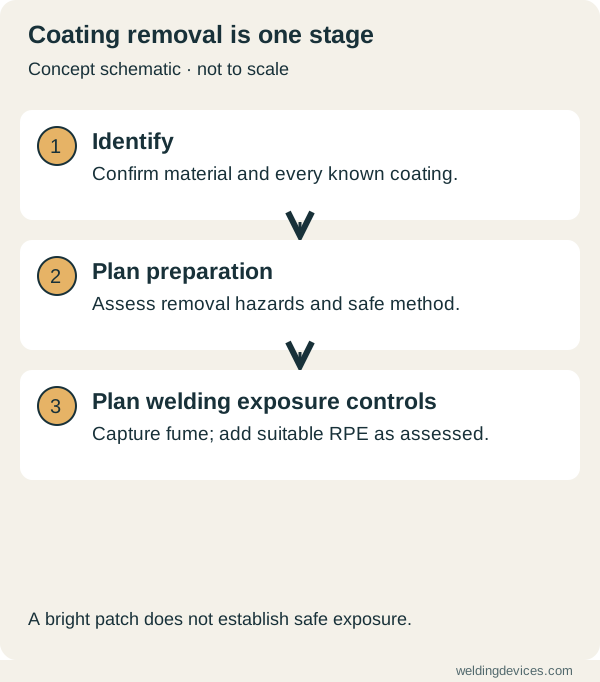
Schematic; source.
Understand the hazard without diagnosing yourself
HSE links metal fume fever particularly with welding or hot work on galvanised metals. Symptoms can begin hours after exposure, so feeling well immediately after a weld is not evidence that the work was adequately controlled. HSE also describes longer-term health risks from welding fume, including lung cancer. Its health-risk guidance distinguishes acute and chronic effects.
NIOSH lists symptoms associated with welding fume, including flu-like illness, cough and breathing difficulty, while stressing that effects vary with the fume components. See the NIOSH Pocket Guide entry. A symptom list cannot determine which substance someone inhaled or diagnose the cause of illness.
If you become unwell following fume exposure, stop the exposure and seek medical advice; breathing difficulty requires urgent help. Tell the healthcare professional what material and process were involved. Prevention belongs before the practice session, rather than depending on whether symptoms appear afterwards.
Preparation needs its own safe method
CCOHS recommends safely removing coatings from the weld area, but explicitly warns against grinding coatings because the dust can be toxic. Its guidance also requires precautions based on the assessment, product instructions and potential exposure. Check the coating-removal section.
The practical question is therefore more precise than “How wide should I grind?” Ask a competent person to specify an appropriate preparation method for the identified coating and job. This lesson gives no universal clearance width, stripping chemical or removal procedure. Those details need evidence applicable to the actual material.
Keep preparation and welding as separate entries in the work plan. Record who performs each stage, what instructions apply and how completion is checked. An undocumented surface change should not become an assumption that the original material has turned into clean, uncoated stock.
Exposure control continues after preparation
HSE's control sequence starts with avoiding or reducing exposure, then source extraction, then suitable respiratory protection. Consider whether the job can use a different joining arrangement or material before committing to hot work. If welding remains necessary, plan the controls for that work. HSE explains this sequence and indoor extraction.
Local exhaust ventilation, or LEV, captures contaminated air near the process. Respiratory protective equipment, or RPE, protects the wearer where the assessed controls require it. Equipment selection and verification need to suit the task; neither a nearby fan nor a product labelled “welding mask” establishes an adequate arrangement.
HSE's guidance is for UK workplaces. Other locations have their own requirements, so use the applicable assessment and local rules. Our extraction and respirator guide explains the equipment questions, while the workspace safety lesson places fume alongside fire, electrical and arc hazards.
Hypothetical worked example: change the plan early
Imagine a learner bringing a coated steel bracket to a supervised practice session. They propose removing a visible patch and using the same setup as yesterday's uncoated practice coupon. No welding has started.
The instructor first asks for the bracket's material and coating information. The learner cannot confirm either. They set it aside and use identified practice material under the session's existing approved arrangements instead. The bracket remains a separate planning question.
For a later review, they collect the supplier details, intended joint, preparation proposal and working location. They ask the competent assessor to address preparation and welding exposure separately. This hypothetical example records a decision process; it does not claim a successful weld, a measured exposure or an approved repair.
Checklist before committing to hot work
- Can you identify the base material and every known coating?
- Are the supplier information and safety instructions available?
- Has a competent person specified the preparation method?
- Has the need for welding been considered before selecting controls?
- Are the required extraction, respiratory protection and checks arranged?
- Is there a clear stop point for unknown material or failed controls?
Self-check: A bright patch is visible where the zinc coating was removed. Does that establish safe welding conditions?
Answer: No. It records a preparation observation. Material identification, the preparation hazards and the welding exposure controls still need verification. Keep those questions separate from deciding whether the finished joint is acceptable for its intended service.
Put the choice in context.
Try the welding process finder to narrow your equipment research, or compare a complete setup in the ownership cost calculator.
References
Open the publisher’s page. If a new tab fails, use “Open directly” or copy the address into your browser.
- CDC/NIOSH — Pocket Guide: Welding fumes · See the NIOSH Pocket Guide entryOpens the source in a new tabcdc.govAutomated check blocked · 31 Oct