
MIG, TIG or stick: choose the process for the job
A practical comparison of control, speed, preparation and working conditions.
Understand a process, solve a problem, or learn about equipment and new technology.
18 guides
A practical comparison of control, speed, preparation and working conditions.
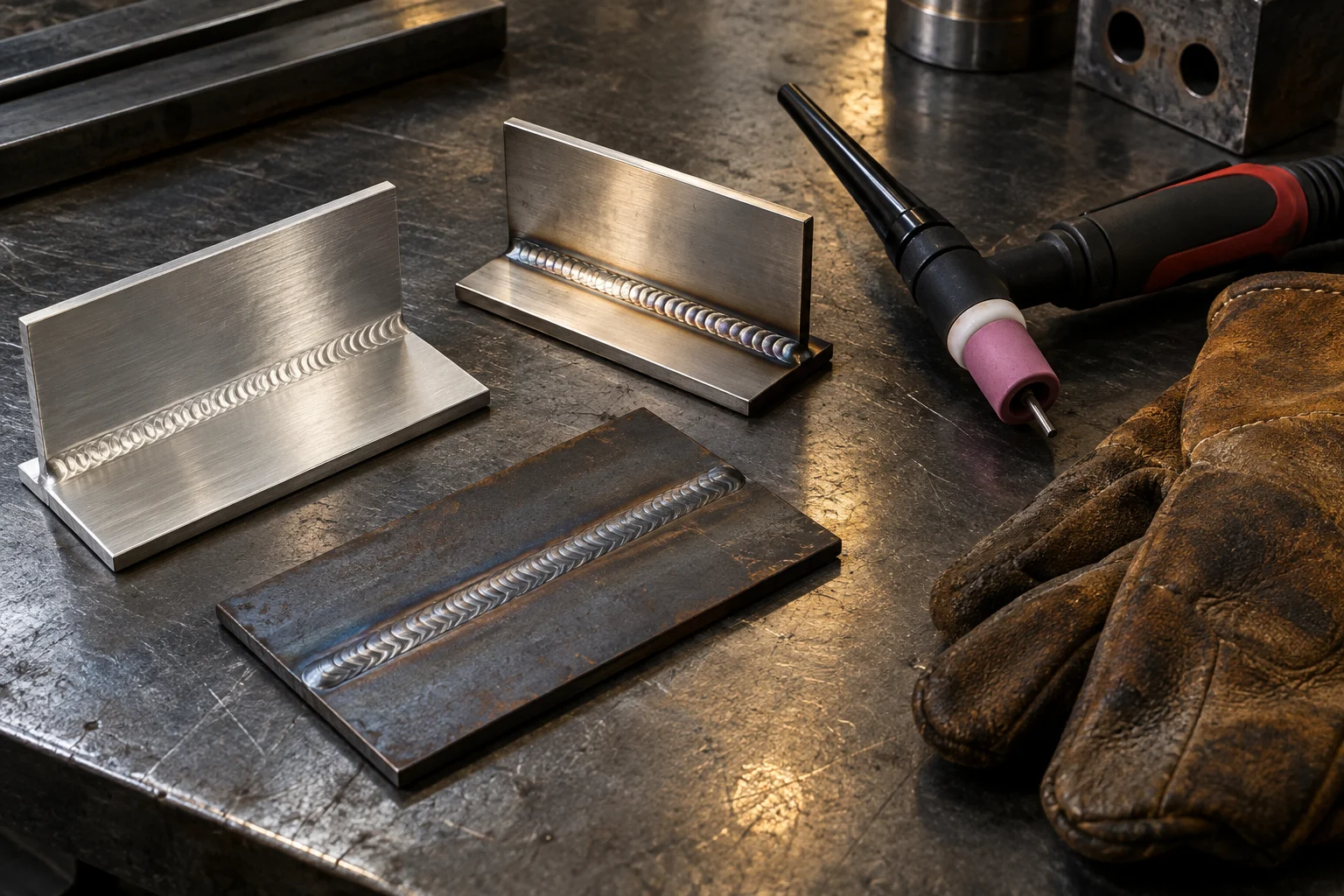
Oxide removal, alloy identification and wire feeding explained before you choose a process.
Understand peak and background current, and where pulse can make a useful difference.
Learn how to record a sudden increase in MIG spatter, check consumable identity and separate equipment, distance and arc-control questions.
Understand why a TIG weld can end in a hollow, how current and filler coordination matter, and when a suspect termination needs assessment.
Learn what DCEP and DCEN mean, why two flux-cored wires can require opposite polarity, and what to verify before changing a spool.
Learn what TIG post-flow protects, why timer ranges differ by machine and how to check your setup without guessing a universal setting.
Learn how to recognise likely TIG tungsten contamination, stop safely, reprepare the electrode and avoid chasing unrelated settings.
Learn setup checks, gun angles, straight beads and a repeatable inspection routine for supervised MIG/MAG practice.
Build TIG coordination through isolated hand practice, supervised pool control, filler timing and careful sample review.
Why a welding helmet is not a respirator, and why moving air is not the same as capturing fume.
Understand the accessories that keep wire feeding, gas delivery and maintenance working together.
Compare lower-cost welding devices by the jobs they support and the cost of the complete setup.
Why grade, heat control and the finished surface matter to a stainless joint.
A structured way to investigate pinholes and trapped gas in a weld.
Why one gas bottle cannot be assumed to suit every welding task.
Compare solid-wire MIG/MAG, self-shielded flux-core and gas-shielded flux-core by work area, setup, total cost and practical limitations.
Fume control, protection, fire prevention and people around you belong in the setup.